
Hip bands are used to train the glutes, hips, and legs. It assists in loading squats, lunges and walks and can cue improved knee and hip track. Most bands utilize fabric with latex blends for grip and are available in light, medium or heavy. To select and utilize one effectively, the following sections discuss:
✅ What is a Hip Band?
What is a hip band? It is a closed loop that you stretch around the legs to add resistance. Most are woven fabric with rubber threads to prevent slip and roll, although latex loops are available as well. The loop shape makes setup fast for squats, kickbacks, lateral walks and clamshells. It pushes your knees or ankles in, so you have to force out.
Hip bands work in small spaces and pair with many moves: squat variations, side steps, monster walks, step-ups, hip thrusts, bridges, kickbacks, fire hydrants, and focused contractions. You can use them lying down for bridges and abductions, standing for lateral walks, or on one leg for single-leg RDL prep.
Position the band high on the thighs for easiest sets, just below the knees for moderate pull, or at the ankles for maximum challenge. Use light bands for warm-ups and for rehab, and use medium to heavy bands for tension during your main lifts. They fit all fitness levels and fit into circuits, mobility flows, and strength plans.
✅ Choosing Your Perfect Band
Pick a slick band that corresponds with your present power, fits your thighs and complements your exercises. Verify resistance, width, length and material. Search for anti-slip, strong stitching and dependable elasticity. Sets with multiple levels take you forward safely over time.
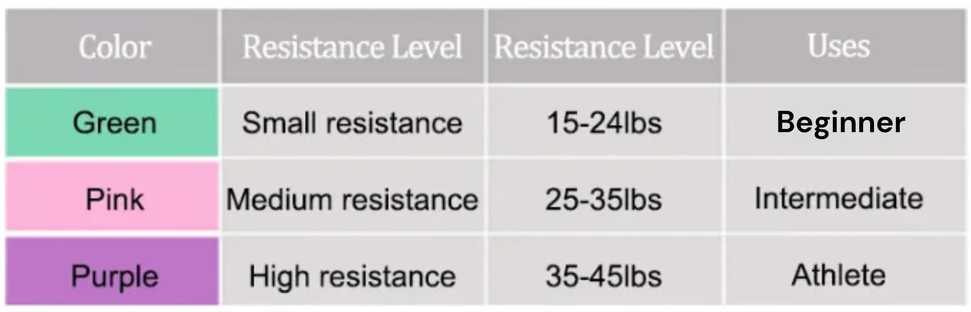
Resistance Level
1.Light: warm-ups, mobility, recovery work, and high-rep glute activation.
2.Medium: Most glute, hip, and leg moves like squats, lateral walks, and hip thrusts.
3.Heavy: Advanced hip abduction, step-outs, deadlift variations, short-range isometrics.
The majority of booty band and leg day moves are optimal with a medium band. It provides sufficient load without compromising form. Don’t chase the maximum tension. Match the band to your skill, then go up when reps and control feel effortless.
Fabric vs. Latex
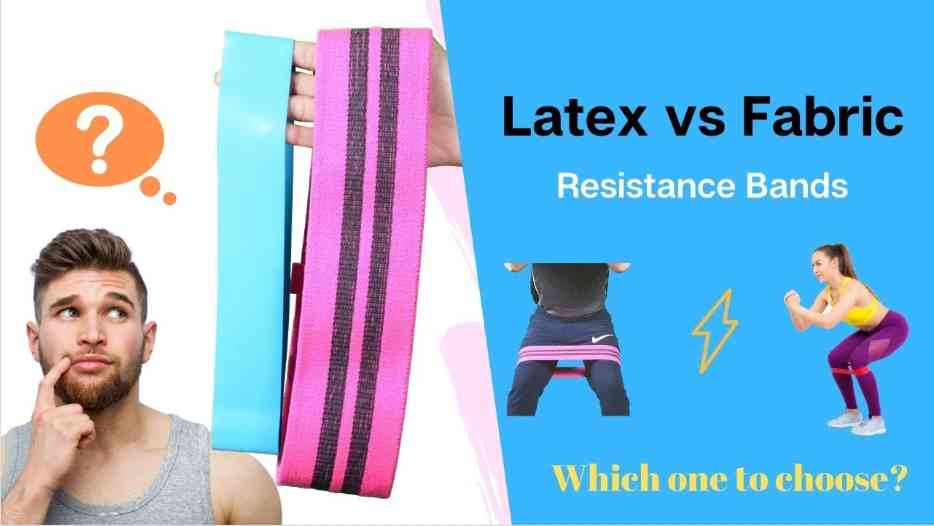
Fabric bands provide a gentle, non-slip grip that stays in place during squats, bridges, and lateral steps. They resist rolling and are less apt to snap. Quality fabric bands incorporate cotton and stretch rubber, with reinforced stitching at the seam to resist stretch and strain.
Latex bands stretch more, are cheaper, and clean quickly with mild soap. They are great for long-range moves and travel. Premium rubber impacts bounce, so look for a consistent stretch and a smooth finish.
Your Fitness Goal
Fit the band to your job. For muscle and strength, use heavier resistance on hip thrusts, goblet squats, and Romanian deadlifts. Whether for toning, endurance, or rehab, lighter bands enable you to maintain form and achieve higher rep counts without joint strain.
Booty gains typically require a medium to heavy fabric band for abductors and thrusts, as well as a lighter band for warm ups. Rehab or mobility work leans lighter with silky latex for easy range of motion. Core sessions combine a light to medium band for pallof holds, monster walks, and carries.
We are committed to delivering exceptional support and
top-tier service whenever you need it!
✅ 8 Essential Hip Band Exercises
A hip band injects concentrated load into the glutes, hips, and thighs. Employ a combination of both compound and isolation moves to develop strength and control. Perform them as a circuit 2 to 3 times per week.
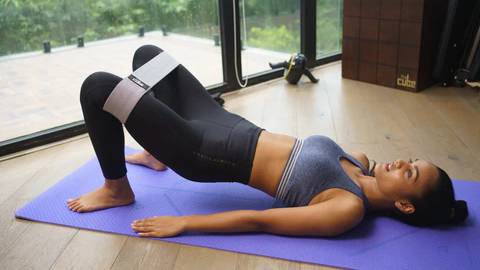
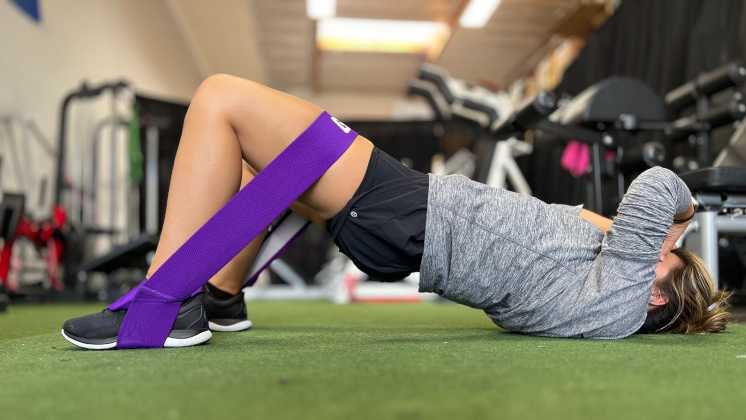
1. Glute Bridge
Position the band just above your knees. Lie on your back, feet hip-width, heels approximately 20 to 30 centimeters from your hips. Drive through your heels, press your knees out, and lift until your hips align with your ribs and knees. Pause, squeeze your glutes hard, then lower with control.
2. Clamshell
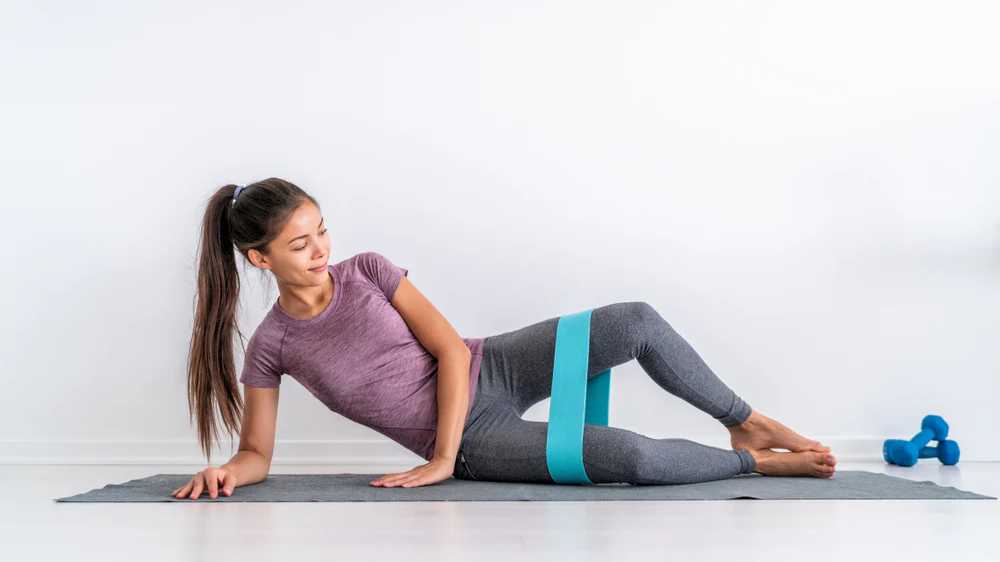
Lie on your side, knees bent 90 degrees, band above knees, heels stacked. Keep feet pressed together and open the top knee against the band without allowing the pelvis to roll. Proceed slow and steady. This hits your hip abductors for side-to-side stability and injury prevention.
3. Lateral Walk
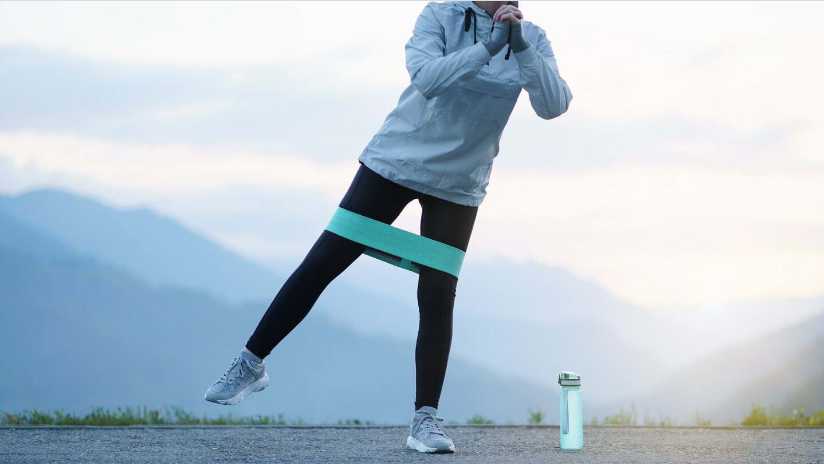
Step into the band and position it above the ankles for more load or above the knees for control. Sit into a shallow squat with your chest up. Select a resistance you can maintain with pristine form. Modify distance or repetitions to suit your ability.
4. Standing Kickback
Band around ankles, stand tall, brace core. Place the weight on one leg, sweeping the other straight back without arching the low back. Squeeze at the top, then lower with control. Switch to the other side. This exercise aids hip extension strength and glute firing for a balanced circuit.
5. Fire Hydrant
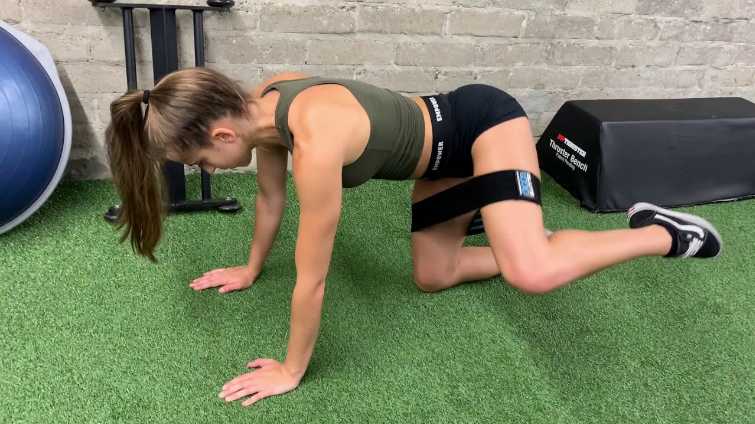
On your hands and knees, with the band above your knees. Raise one knee out to the side with your hips level. Manage the drop. Do both sides to develop symmetrical hip strength. This targets the glute medius and promotes improved single-leg stability. It can relax patterns that impel knee valgus.
6. Squat
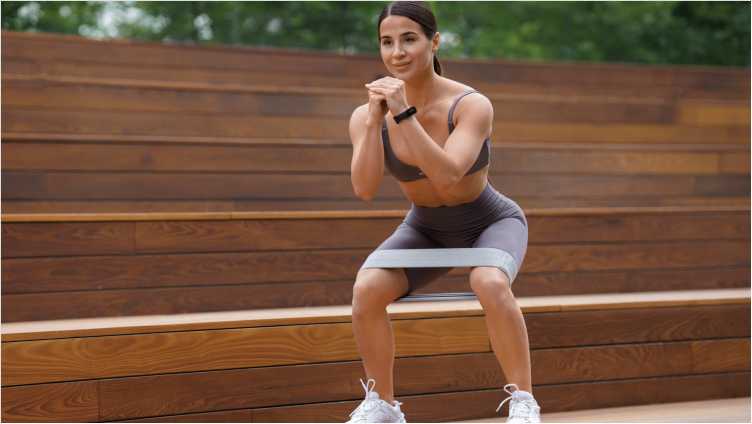
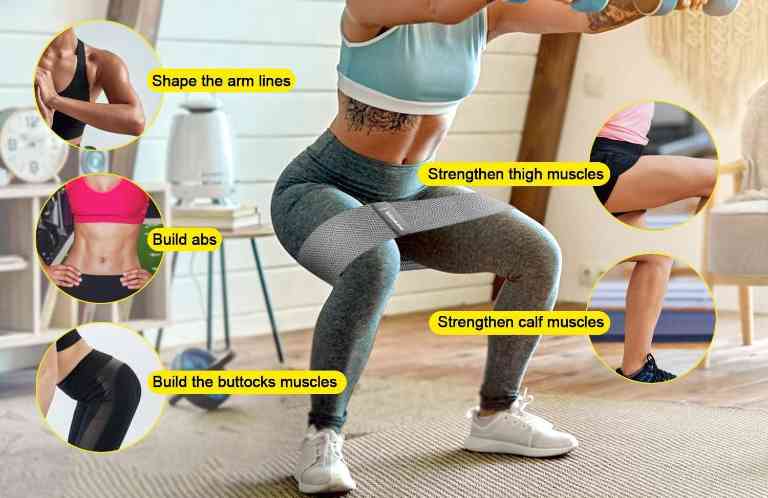
Band over knees or mid-thigh. Sit down and back, press knees out to maintain alignment over mid-foot. Mix stress with a sumo, pulse, or deep squat. This is a powerful choice on leg or full-body days to amplify lower-body power.
7. Hip Thrust
Set upper back on a bench, feet flat, band above knees. Thrust hips up, press knees out, pause and squeeze, then lower slow. High glute activation for strength and size. Level up band load or add tempo work.
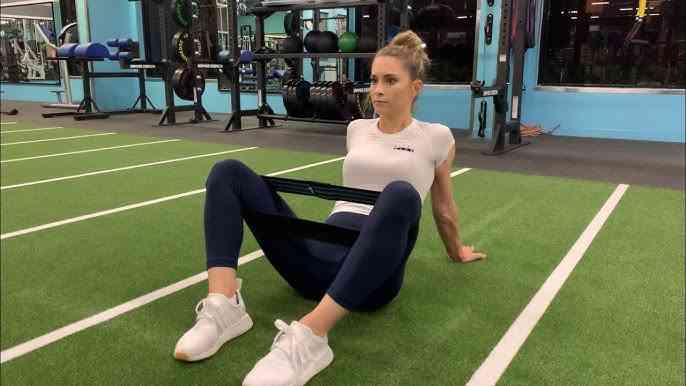
8. Seated Abduction
Sit tall, band above knees, feet flat. Open knees wide, hold 1 second, come back without slack. This exercise trains hip abduction, is great between sets, and gets your hips prepped for flexor EMOM stretching.
✅ Beyond Glute Activation
Hip bands do more than ‘activate’ the glutes. They cultivate core control, feed joint health, and connect strength throughout the body. Key benefits:
Core Stability
Plank abductions with a hip band above the knees transform a deceptively simple plank into a total core drill. Try to drive your knees out to the side as you keep your ribs down. The band challenges you into a collapse, so your TA and obliques have to brace all the harder.
Side-lying clamshell holds, half-kneeling Pallof presses with a looped hip band, and dead bug abductions instruct anti-rotation and anti-extension. This aids posture, spine protection, and decreases energy leaks during lifts and sprints.
Supplement with banded bear crawls or marching bridges to train balance and timing. While these moves activate the glutes, they activate the legs, so they serve as a low-load warm-up before heavy lifting. Keep sets short and crisp: 2 to 3 sets of 20 to 40 seconds.
Hip Mobility
Use a light band for hip flexor openers: loop around the front hip crease, anchor the other end to a sturdy post, step forward into a half-kneel, and pulse gently. For example, pair with dynamic leg swings while the band cues the joint to track well.
Light resistance relieves tightness without imposing range. Try banded hamstring flossing and adductor rock-backs for slicker movement. The objective is control through range, not simply more range.
Target rotation with banded seated external rotation and standing internal rotation step-outs. Do 8-12 reps each side. Slip these drills in warm-ups to prime joints or cooldowns to recover after deep squats or runs. Maintain band resistance light to moderate.
Injury Prevention
Weak or underused hips can transfer stress to the knees and back. Forget about ignoring areas of your glutes because this can lead to imbalances, dysfunction, and even a flat butt. Hip-band work fills gaps by training abduction, extension, and rotation.
In rehab, use slow tempos and small ranges: banded bridges, side steps, and terminal knee abduction. Advance resistance only if pain-free. Allow 24 to 48 hours between hip-specific sessions. Correct patterns with focused sets prior to core lifts.
Glute activation can be done daily at low volume and still hit core and legs. Monitor improvements with occasional one-rep maximum checks on hip thrusts or deadlifts to inform band selection and volume. If you only feel the burn in squats, still add activation and how strong glutes propel athletic technique and everyday movement.
✅ Conclusion
A hip band does some serious business for less than pocket change. It puts load on quickly. It literally fits in any bag. It scales for all levels. That mix makes it a savvy choice for power and style.
For clear next steps, try this stack: 2 sets of 12 band walks, 2 sets of 10 bridges, 2 sets of 8 hinges. Rest 45 seconds. Done. You like guides and plans? Sign up to our list or grab the quick-start sheet.

Talk To Our Experts
Connect with an NQ expert to discuss your product needs
and get started on your project.
✅ FAQs About Hip Booty Bands
What is a hip band and how does it work?
Hip band – A looped resistance band you wear above your knees or around your ankles. It provides lateral tension. This turns your glutes and hips on, stabilizes and intensifies workouts. It’s portable, cheap, and great for warm-ups, strength, and injury prevention.
Fabric or latex: which hip band is better?
Fabric bands are broader, non-slip, and comfy. They’re excellent for squats and lateral walks. Latex bands provide more stretch and options for full-body moves. Select by comfort, durability, and your fitness objectives.
How often should I use a hip band?
Wear it two to four times a week. Toss it into warm-ups for activation or strength sessions. Allow a minimum of 48 hours of rest between intense lower-body workouts. Strength doesn’t come from straining; it comes from consistency, which builds strength and stability without overuse.
Can hip bands help with knee pain or injury prevention?
Uh-huh, if you use them right. They train your glute medius and external rotators to properly align your knees and hips. This can decrease valgus collapse and stress on knees. Of course, always see a professional if you’re in pain or have a medical condition.
Do hip bands replace weights for glute growth?
They go with not instead! Bands increase activation and provide continuous tension. Marry them with weight-based progressive overload for excellent hypertrophy. Employ bands to prime muscles, polish form, and introduce volume without joint stress.
Post time: Nov-14-2022